HERCA relaunches the campaign “Getting the right image for my patient”
On 11 September 2025, at the autumn meeting of the Working Group on Medical Applications, HERCA (Heads of the European Radiological Protection Competent Authorities) is relaunching the European communication campaign entitled “Getting the right image for my patient”. This campaign is being run in 19 European countries and aims to raise awareness of the appropriate use of medical radiological examinations.
The initiative is aimed at healthcare professionals who request radiological examinations for their patients in daily clinical practice. Although medical imaging is a powerful tool for diagnosis and treatment, it also involves exposure to ionizing radiation, which may pose health risks if not properly justified.
Radiological examinations should always benefit the patient; however, numerous studies in Europe have shown that a significant number of these procedures are unnecessary. The EU-JUST-CT coordinated action (a project aimed at improving the justification of computed tomography in the EU) recently showed that up to 40% of the CT scans performed in European countries may be inappropriate. Similarly, the European Action Week of inspections initiative organized by HERCA in 2016 highlighted the urgent need to raise awareness among professionals of the importance of justification in medical imaging.
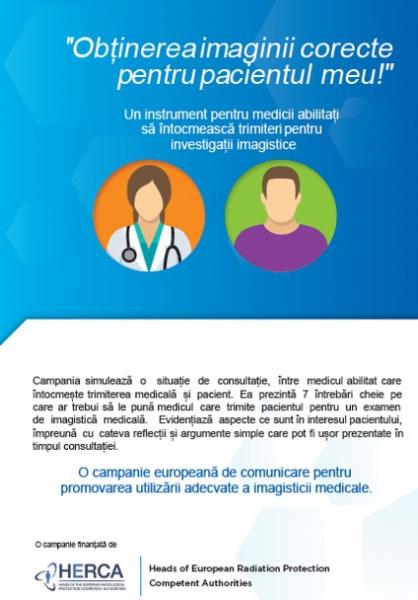
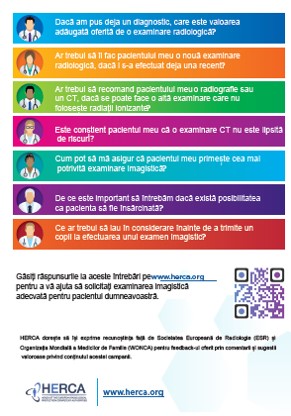
At the core of the campaign is a set of seven key questions:
- If I have already made a diagnosis, what is the added value of a radiological examination?
- Should I give my patient a new radiological examination if one has already been performed recently?
- Should I recommend an X-ray or a CT scan for my patient if another examination that does not use ionizing radiation can be performed?
- Is my patient aware that a CT examination is not free of risk?
- How can I make sure that my patient receives the most appropriate imaging examination?
- Why is it important to ask whether the patient might be pregnant?
- What should I consider before referring a child for an imaging examination?
The questions are designed to support medical specialists in making optimal decisions when requesting radiological examinations. These questions are intended to:
- Encourage the use of the available decision support tools,
- Promote effective communication with patients,
- Help identify the most appropriate imaging method - or the alternative - according to clinical needs.
The ultimate goal is to ensure that patients receive the right diagnosis through the right examination, enabling timely treatment and avoiding unnecessary procedures that provide no clinical benefit.
The campaign materials, developed by HERCA, are available in several languages and are adapted to meet national needs. Each participating country coordinates its own campaign using the common core materials, ensuring both consistency and local relevance.
Initially launched in November 2019, the campaign had a limited impact because of the COVID-19 pandemic. In view of the new insights from the EU-JUST-CT project and the renewed momentum regarding justification in imaging, HERCA decided to relaunch the initiative with wider participation and a renewed focus.
By promoting the appropriate use of medical imaging, HERCA aims to improve radiation protection and to contribute to the overall quality of healthcare in its member states.
For more information about the campaign, including access to the seven key questions and links to national initiatives, please visit the official HERCA website:
https://www.herca.org/getting-the-right-image-for-my-patient/
You can also follow HERCA's campaign updates and highlights on LinkedIn: HERCA's LinkedIn page
(https://www.linkedin.com/company/herca/?originalSubdomain=cz)
The national campaigns are coordinated by the respective authorities in each participating country and can be accessed through the HERCA website.
HERCA is a voluntary association in which the heads of the European competent authorities for radiation protection work together to identify common issues and propose practical solutions to them. Its current areas of work include, among others, medical and veterinary applications of ionizing radiation, radiological emergency preparedness and response, radon and naturally occurring radioactive materials. HERCA's work programme is based on common interest in significant regulatory issues.
HERCA currently brings together 56 radiation protection authorities from 32 European countries. These authorities develop national legal frameworks for the safe use of ionizing radiation and carry out inspections to ensure compliance with all legal and regulatory requirements.